Networking trends to consider during trade shows
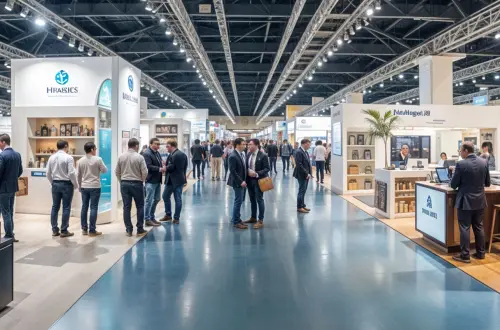
Networking is a pivotal business objective for many professionals across many industries. It is due to the process aiding in driving growth by establishing strategic alliances. Furthermore, it generates leads. In addition, it highlights new opportunities and the gaining of industrial know-how. Simultaneously, it supports talent acquisition and building long-term business connections. Generally, meetings and trade events such as trade shows serve as the most recommended means of networking. Yet, to ensure optimal results from such participations, it is crucial to leverage every line of approach. One example is considering which trade show is suitable for your business. Another is leveraging the latest directions related to the process. What are the networking trends to consider during trade shows?
Online networking is the new black and starts long before the event
One of the networking trends to consider during trade shows is the rise of online collaboration. Following recent global developments, there has been a notable rise in online connection requests. Recent values supporting this trend are reaching 4.9 million. In comparison, the same period reached 4.2 million meetings and badge scans. Additionally, 67% of all networking activities at trade events comprise digital connections.
What is motivating the onset of this trend? How can professionals and organisers leverage it? The rise in online connections is due to diverse reasons. Among them are:
- The increasing number of hosted events per year;
- The growing participant numbers;
- The increased use of digital tools for networking.
To leverage this trend, opt for facilitating digital-first information networking opportunities. For the task, seek out potential leads before the event day. It will take advantage of another networking trend. In particular, it will leverage the tendency for collaboration beginning long before the event. In recent years, between 50% and 79% of all networking activity occurs before the event.
The larger the event, the more networking takes place
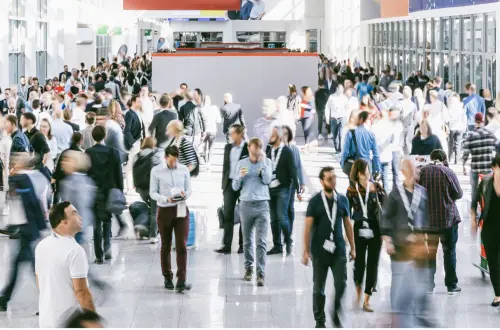
The more extensive and highly attended the event is, the larger the network. It is one of the networking trends to consider during trade shows.
Yet, while this is quite beneficial, it can also be challenging. It is because the increasing demand for noteworthy interchanges can lead to diverse complications. Especially when hosted at some of Europe’s largest venues. Particularly for trade show organisers. Yet, there are several means to facilitate such interactions and leverage the trend. These include nurturing networking before and after the event. You can do this via messaging and scheduling meetings. Also, opt for studying which collaboration events in the programme can aid professionals. Examples include roundtables, speed networking, or designated sessions in specialised areas.
What fuels networking? AI, generating leads, and connections between peers
Two categories of attendees highly influence the networking landscape:
- attendee-to-attendee (A-t-A);
- exhibitor outreach to attendees (E-O-t-A).
It is due to the two groups comprising the vast majority of the participant group. As a result, they are developing 70% of all networking requests. It applies especially to Tier 1 trade events.
- There is one notable tendency among the networking trends to consider during trade shows. It is that the A-t-A and E-O-t-A groups implement AI matchmaking. It is due to such tools facilitating:
- improved matchmaking;
- initiating contacts;
- The alignment of attendee preferences and interests.
It subsequently aids by enhancing connection acceptance rates. For example, Tier 2 and 1 trade shows receive rate improvements of 200 and 170%, respectively. Similarly, same-tier conferences receive connection acceptance rate boosts of 39% and 65%, respectively. To leverage this particular trend, opt for incorporating automation and AI. Ensure it applies especially to event apps. Ensure such applications have options such as:
- algorithms that use shared interests, roles, and professional goals.
- Automated meeting schedules that optimise 1-om-1 meetings.
These will ensure an optimal networking experience for attendees, lecturers and exhibitants.
Summary
Networking can achieve diverse business objectives. It applies to professionals in various industries. Yet, optimising such a process and ensuring the most optimal results can be challenging. Several steps need to be taken, in addition to leveraging the mentioned trends. If you would like to learn about them, contact Travel 2 Fairs Ltd.